


All Products
-
Stainless Steel Strip
-
Stainless Steel Sheet
-
Stainless Steel Plate
-
Stainless Steel Pipe
-
Stainless Steel Bar
-
Galvanized Steel Coil
-
Steel Plate
-
Steel Round Bar
-
Nickel Alloy
-
Seamless Steel Pipe
-
Stainless Steel Beam
-
Copper Plate Sheet
-
Copper Round Bar
-
stainless steel round bar
-
stainless steel channel bar
-
stainless steel angle bar
-
stainless steel coil strip
-
stainless steel flat bar
-
stainless steel circle
-
Pipe Fitting
-
Water Ripple Stainless Steel Sheet
-
Nickel Alloy and Super Alloy
-
cold rolled steel coil
-
copper
-
Nickel Base Alloy Products
-
Others
-
 Raian IonescuMaterial quality very good. we have cooperate more than 10 Years. They trade lots kinds of steel material. All material quality good. They duty for all material quality. We are planing continue cooperate with them in the future
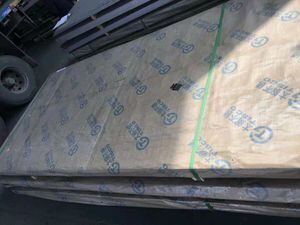
Inconel 625 Alloy 625 Plate with High Temperature Resistance, Corrosion Resistant, and Hot Rolled for Industrial Applications

Product Details
| Model NO. | Inconel 625 | Shape | Flat |
|---|---|---|---|
| Technique | Hot Rolled | Surface Treatment | Polished |
| Specification | 1220*2440, 1500*3000, 1500*6000, 2000*6000mm | Density | 8.44 G/cm3 |
| Specific Heat | 427 J/kg-°K (0-100°C) | Modulus Of Elasticity | 207.5 GPa |
| Thermal Conductivity | 10.8 W/m-°K | Melting Range | 1290 - 1350°C |
| Electrical Resistivity | 128.9 Microhm-cm At 210°C | Yield Strength | 448 MPa |
| Ultimate Tensile Strength | 862 MPa | Elongation | 50% |
| Hardness | 200 Brinell | ||
| Highlight | High Temperature Resistance Inconel 625 Plate,Corrosion Resistant Alloy 625 Plate,Hot Rolled Nickel-Chromium-Molybdenum-Niobium Plate |
||
Product Description
Inconel 625 DIN 2.4856 Uns N06625 High Temperature Alloys Plate
Inconel 625 Alloy 625 DIN2.4856 plate sheet made in USA SMC/ATI/HAYNES
General Properties
Alloy 625 is an austenitic nickel-chromium-molybdenum-niobium alloy possessing outstanding corrosion resistance coupled with high strength from cryogenic temperatures to 1800°F (982°C). The strength is derived from solid-solution hardening of the nickel-chromium matrix by molybdenum and niobium, eliminating the need for precipitation-hardening treatments.
The chemical composition provides exceptional corrosion resistance in severe operating environments, with resistance to oxidation, carburization, pitting, crevice corrosion, impingement corrosion, intergranular attack, and virtual immunity to chloride stress corrosion cracking. Alloy 625 can be easily welded and processed using standard shop fabrication practices.
Applications
- Aerospace Components - bellows and expansion joints, ducting systems, jet engine exhaust systems, engine thrust-reversers, turbine shroud rings
- Air Pollution Control - chimney liners, dampers, flue gas desulfurization (FGD) components
- Chemical Processing - equipment handling both oxidizing and reducing acids, super-phosphoric acid production
- Marine Service - steam line bellows, Navy ship exhaust systems, submarine auxiliary propulsion systems
- Nuclear Industry - reactor core and control rod components, waste reprocessing equipment
- Offshore Oil and Gas Production - waste flare gas stacks, piping systems, riser sheathing, sour gas piping and tubing
- Petroleum Refining - waste flare gas stacks
- Waste Treatment - waste incineration components
Standards
ASTM: B 443
ASME: SB 443
AMS: 5599
ASME: SB 443
AMS: 5599
Chemical Analysis
Weight % (all values are maximum unless a range is otherwise indicated)
| Element | Composition | Element | Composition |
|---|---|---|---|
| Nickel | 58.0 min. | Silicon | 0.50 |
| Chromium | 20.0 min.-23.0 max. | Phosphorus | 0.015 |
| Molybdenum | 8.0 min.-10.0 max. | Sulfur | 0.015 |
| Iron | 5.0 | Aluminum | 0.40 |
| Niobium (plus Tantalum) | 3.15 min.-4.15 max. | Titanium | 0.40 |
| Carbon | 0.10 | Cobalt (if determined) | 1.0 |
| Manganese | 0.50 |
Physical Properties
| Property | Value |
|---|---|
| Density | 0.305 lbs/in³ | 8.44 g/cm³ |
| Specific Heat | 0.102 BTU/lb-°F (32-212°F) | 427 J/kg-°K (0-100°C) |
| Modulus of Elasticity | 30.1 x 10⁶ psi | 207.5 GPa |
| Thermal Conductivity 200°F (100°C) | 75 BTU/hr/ft²/ft/°F | 10.8 W/m-°K |
| Melting Range | 2350 - 2460°F | 1290 - 1350°C |
| Electrical Resistivity | 50.8 Microhm-in at 70°C | 128.9 Microhm-cm at 210°C |
Mean Coefficient of Thermal Expansion
| Temperature Range | in/in/°F | cm/cm°C |
|---|---|---|
| 200°F | 93°C | 7.1 x 10⁻⁶ | 12.8 x 10⁻⁶ |
| 400°F | 204°C | 7.3 x 10⁻⁶ | 13.1 x 10⁻⁶ |
| 600°F | 316°C | 7.4 x 10⁻⁶ | 13.3 x 10⁻⁶ |
| 800°F | 427°C | 7.6 x 10⁻⁶ | 13.7 x 10⁻⁶ |
| 1000°F | 538°C | 7.8 x 10⁻⁶ | 14.0 x 10⁻⁶ |
| 1200°F | 649°C | 8.2 x 10⁻⁶ | 14.8 x 10⁻⁶ |
| 1400°F | 760°C | 8.5 x 10⁻⁶ | 15.3 x 10⁻⁶ |
| 1600°F | 871°C | 8.8 x 10⁻⁶ | 15.8 x 10⁻⁶ |
| 1700°F | 927°C | 9.0 x 10⁻⁶ | 16.2 x 10⁻⁶ |
Mechanical Properties
Typical Values at 68°F (20°C)
| Yield Strength 0.2% Offset | Ultimate Tensile Strength | Elongation in 2 in. | Hardness |
|---|---|---|---|
| 65,000 psi (min.) | 448 MPa | 125,000 psi (min.) | 862 MPa | 50% (min.) | 200 Brinell (max.) |
Corrosion Resistance
The highly alloyed chemical composition of Alloy 625 imparts outstanding corrosion resistance in severely corrosive environments. The alloy is virtually immune to attack in mild conditions such as atmosphere, fresh and sea water, neutral salts and alkaline solutions. Nickel and chromium provide resistance to oxidizing solutions, while nickel and molybdenum supply resistance in non-oxidizing environments. Molybdenum provides resistance to pitting and crevice corrosion, and niobium acts as a stabilizer during welding to prevent intergranular cracking. The high nickel content makes Alloy 625 virtually immune to chloride stress corrosion cracking.
Pitting Resistance Equivalency Numbers (PREN)
| Alloy | Ni | Cr | Mo | W | Nb | N | PREN |
|---|---|---|---|---|---|---|---|
| 316 Stainless Steel | 12 | 17 | 2.2 | - | - | - | 20.4 |
| 317 Stainless Steel | 13 | 18 | 3.8 | - | - | - | 23.7 |
| Alloy 825 | 42 | 21.5 | 3 | - | - | - | 26.0 |
| Alloy 864 | 34 | 21 | 4.3 | - | - | - | 27.4 |
| Alloy G-3 | 44 | 22 | 7 | - | - | - | 32.5 |
| Alloy 625 | 62 | 22 | 9 | - | 3.5 | - | 40.8 |
| Alloy C-276 | 58 | 16 | 16 | 3.5 | - | - | 45.2 |
| Alloy 622 | 60 | 20.5 | 14 | 3.5 | - | - | 46.8 |
| SSC-6MO | 24 | 21 | 6.2 | - | - | 0.22 | 48.0 |
| Alloy 686 | 58 | 20.5 | 16.3 | 3.5 | - | - | 50.8 |
Fabrication Data
Hot Forming
The hot-working temperature range for Alloy 625 is 1650 - 2150°F (900 - 1177°C). Heavy working should occur near 2150°F (1177°C), while lighter working can take place down to 1700°F (927°C). Use uniform reductions to prevent duplex grain structure.
Cold Forming
Alloy 625 can be cold-formed using standard shop fabrication practices in the annealed condition. Work hardening rates are higher than austenitic stainless steels.
Welding
Alloy 625 can be readily welded by most standard processes including GTAW (TIG), PLASMA, GMAW (MIG/MAG), SAW and SMAW (MMA). No post weld heat treatment is necessary. Brushing with stainless steel wire brush after welding removes heat tint.
Machining
Alloy 625 should be machined in the annealed condition. Due to work-hardening tendency, use low cutting speeds with continuous tool engagement and adequate cut depth to avoid work-hardened zones.
Packing

Recommended Products