


All Products
-
Stainless Steel Strip
-
Stainless Steel Sheet
-
Stainless Steel Plate
-
Stainless Steel Pipe
-
Stainless Steel Bar
-
Galvanized Steel Coil
-
Steel Plate
-
Steel Round Bar
-
Nickel Alloy
-
Seamless Steel Pipe
-
Stainless Steel Beam
-
Copper Plate Sheet
-
Copper Round Bar
-
stainless steel round bar
-
stainless steel channel bar
-
stainless steel angle bar
-
stainless steel coil strip
-
stainless steel flat bar
-
stainless steel circle
-
Pipe Fitting
-
Water Ripple Stainless Steel Sheet
-
Nickel Alloy and Super Alloy
-
cold rolled steel coil
-
copper
-
Nickel Base Alloy Products
-
Others
-
 Raian IonescuMaterial quality very good. we have cooperate more than 10 Years. They trade lots kinds of steel material. All material quality good. They duty for all material quality. We are planing continue cooperate with them in the future
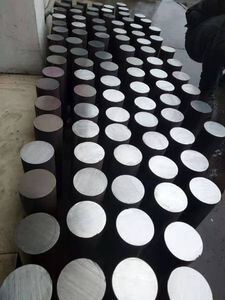
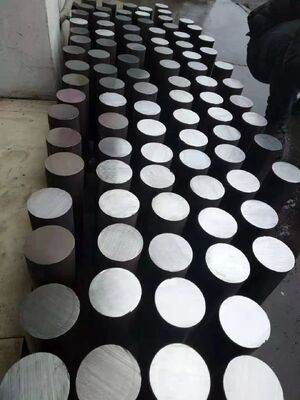
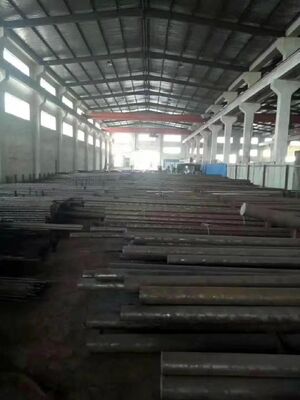
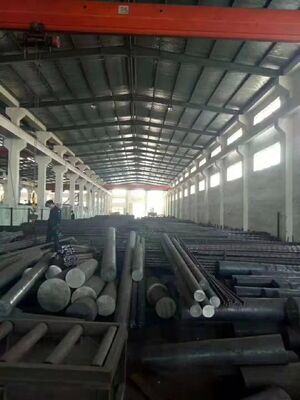
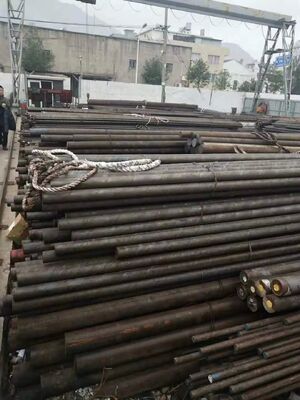
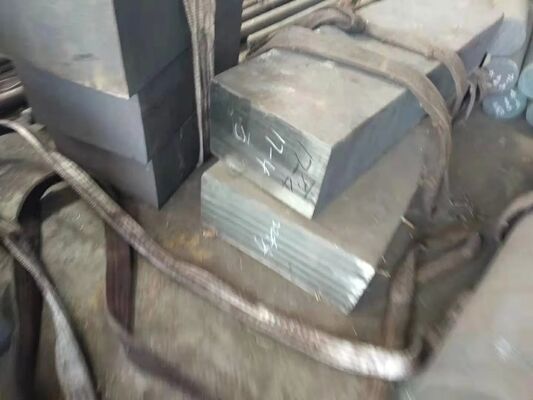
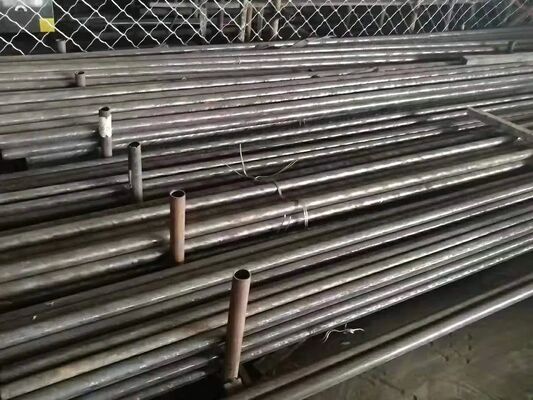
Bright Surface Hot Rolled 17-4PH Stainless Steel Round Bar with OD 6-300mm AISI 630


Product Details
| Model NO. | 630 | Shape | Round |
|---|---|---|---|
| Technique | Hot Rolled | Surface Treatment | Bright |
| Specification | OD 6-300mm | Production Capacity | 50000kgs |
| Tensile Strength | 1105-1310 MPa | Yield Strength | 1000-1170 MPa |
| Elongation | 10-16% | Hardness Rockwell C | 28-44 HRC |
| Hardness Brinell | 277-388 HB | Thermal Conductivity | 18.4-22.7 W/m.K |
| Specific Heat | 460 J/kg.K | Elec Resistivity | 800 NΩ.m |
| Density | 7750 Kg/m³ | ||
| Highlight | Bright Surface Stainless Steel Round Bar,OD 6-300mm 17-4PH Stainless Steel Bar,Hot Rolled AISI 630 Round Bar |
||
Product Description
SS 630 Stainless Steel Round Bar Bright AISI 630 17-4PH
17-4PH Stainless Steel Overview
17-4 Precipitation Hardening (Type 630) is a chromium-copper precipitation hardening stainless steel used for applications requiring high strength and moderate corrosion resistance. High strength is maintained to approximately 600°F (316°C).
General Properties
Alloy 17-4 PH is a precipitation hardening martensitic stainless steel with Cu and Nb/Cb additions. The grade combines high strength, hardness (up to 572°F / 300°C), and corrosion resistance.
Mechanical properties can be optimized with heat treatment. Very high yield strength up to 1100-1300 MPa (160-190 ksi) can be achieved.
This grade should not be used at temperatures above 572°F (300°C) or at very low temperatures. It has adequate resistance to atmospheric corrosion or in diluted acids or salts where its corrosion resistance is equivalent to Alloy 304 or 430.
Applications & Standards
| Applications | Standards |
|---|---|
|
|
Corrosion Resistance
Alloy 17-4 PH withstands corrosive attacks better than any of the standard hardenable stainless steels and is comparable to Alloy 304 in most media.
If there are potential risks of stress corrosion cracking, higher aging temperatures above 1022°F (550°C), preferably 1094°F (590°C), must be selected. 1022°F (550°C) is the optimum tempering temperature in chloride media, while 1094°F (590°C) is optimum in H2S media.
The alloy is subject to crevice or pitting attack if exposed to stagnant seawater for extended periods. It is corrosion resistant in chemical, petroleum, paper, dairy and food processing industries (equivalent to 304L grade).
Technical Specifications
Chemical Composition
Composition ranges for grade 630 stainless steels:
| Element | Min (%) | Max (%) |
|---|---|---|
| C | - | 0.07 |
| Mn | - | 1.00 |
| Si | - | 1.00 |
| P | - | 0.04 |
| S | - | 0.030 |
| Cr | 15.00 | 17.50 |
| Ni | 3.00 | 5.00 |
| Cu | 3.00 | 5.00 |
| Nb+Ta | 0.15 | 0.45 |
Mechanical Properties
| Condition | Tensile Strength (MPa) | Yield Strength 0.2% Proof (MPa) | Elongation (% in 50mm) | Hardness Rockwell C (HR C) | Hardness Brinell (HB) |
|---|---|---|---|---|---|
| Solution Treated | 1105 typ | 1000 typ | 15 typ | 38 max | 363 max |
| Condition 900 | 1310 min | 1170 min | 10 min | 40 min | 388 min |
| Condition 1150 | 930 min | 724 min | 16 min | 28 min | 277 min |
Physical Properties
| Property | Value |
|---|---|
| Density (kg/m³) | 7750 |
| Thermal Expansion 0-100°C (µm/m/°C) | 10.8 |
| Thermal Expansion 0-315°C (µm/m/°C) | 11.6 |
| Thermal Conductivity at 100°C (W/m.K) | 18.4 |
| Thermal Conductivity at 500°C (W/m.K) | 22.7 |
| Specific Heat 0-100°C (J/kg.K) | 460 |
| Electrical Resistivity (nΩ.m) | 800 |
Alternative Grades Comparison
| Alternative Grade | Reasons for Choosing |
|---|---|
| 431 | Higher toughness than 17-4PH, better availability in some sizes |
| 416 | Free-machining martensitic stainless steel - better for repetition machining, lower cost |
| 316 | Higher corrosion resistance to resist more severe environments, but with much lower strength than 17-4PH |
| 2205 | Much better corrosion resistance than 17-4PH, with lower strength (but not as low as 316) |
Heat Treatment
Solution treatment (Condition A): Grade 630 stainless steels are heated at 1040°C for 0.5 h, then air-cooled to 30°C. Small sections can be oil quenched.
Hardening: Grade 630 stainless steels are age-hardened at low temperatures to achieve required mechanical properties. During the process, superficial discoloration occurs followed by shrinkage at 0.10% for condition H1150, and 0.05% for condition H900.
| Condition | Hardening Temp (°C) | Time (h) | Typical Hardness Rockwell C | Tensile Strength (MPa) |
|---|---|---|---|---|
| A | Ann | - | 36 | 1100 |
| H900 | 482 | 1 | 44 | - |
| H925 | 496 | 4 | 42 | 1170-1320 |
| H1025 | 552 | 4 | 38 | 1070-1220 |
| H1075 | 580 | 4 | 36 | 1000-1150 |
| H1100 | 593 | 4 | 35 | 970-1120 |
| H1150 | 621 | 4 | 33 | 930-1080 |
Fabrication & Processing
Welding: Grade 630 stainless steels can be welded using all conventional methods and do not require pre-heating. Care should be taken in designing and welding high strength steels to prevent weldment stresses.
Machining: Grade 630 stainless steels can be machined in their solution-treated condition. They have machining rates similar to grade 304 steels.
Applications
- Engine components
- High strength and boat propeller shafts
- Plastic moulding dies
- Valves and gears
Product Images

Recommended Products