


All Products
-
Stainless Steel Strip
-
Stainless Steel Sheet
-
Stainless Steel Plate
-
Stainless Steel Pipe
-
Stainless Steel Bar
-
Galvanized Steel Coil
-
Steel Plate
-
Steel Round Bar
-
Nickel Alloy
-
Seamless Steel Pipe
-
Stainless Steel Beam
-
Copper Plate Sheet
-
Copper Round Bar
-
stainless steel round bar
-
stainless steel channel bar
-
stainless steel angle bar
-
stainless steel coil strip
-
stainless steel flat bar
-
stainless steel circle
-
Pipe Fitting
-
Water Ripple Stainless Steel Sheet
-
Nickel Alloy and Super Alloy
-
cold rolled steel coil
-
copper
-
Nickel Base Alloy Products
-
Others
-
 Raian IonescuMaterial quality very good. we have cooperate more than 10 Years. They trade lots kinds of steel material. All material quality good. They duty for all material quality. We are planing continue cooperate with them in the future
High-Quality 409L Stainless Steel Sheet 2D NO.1 Surface Ideal for Automotive Exhaust Systems
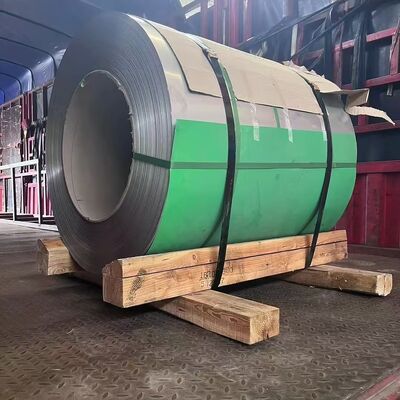


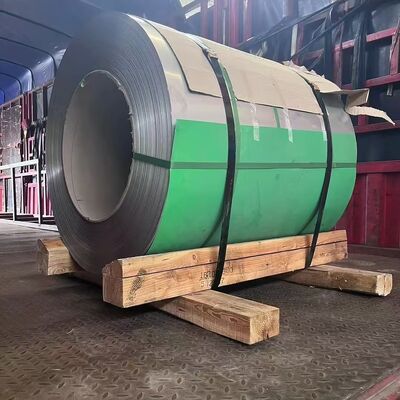
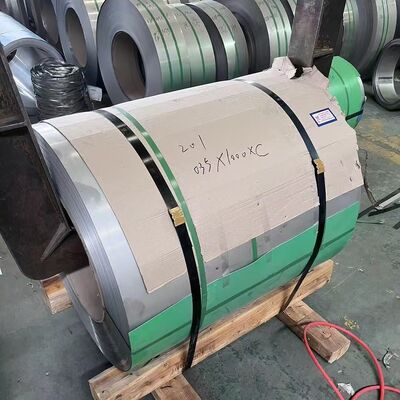

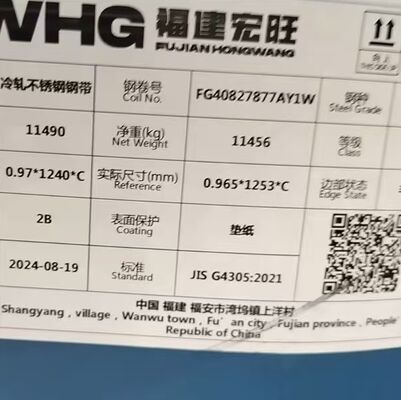
Product Details
| Products | Stainless Steel Plate | Grade | 409L |
|---|---|---|---|
| Thickness | 0.5-50.0mm | Tech | Cold Rolled,hot Rolled , Forged |
| Width | 1000mm 1219mm 1500mm Or Customs As Request | Surface | 2B NO.1 |
| Standard | ASTM GB JIS EN DIN | MOQ | 1 Ton |
| Highlight | 409L stainless steel sheet,stainless steel sheet for automotive exhaust,2D NO.1 surface stainless steel sheet |
||
Product Description
High-Quality 409L Stainless Steel Sheet 2D NO.1 Surface Ideal for Automotive Exhaust Systems
Stainless Steel Plate Specifications
| Name | 409L stainless steel Plate |
| Our Grade |
200 Series: 201 202 300 Series: 301 304,304L,304H,309S,310S,314,316L,316Ti,316H,316LN,317L,321,329,347 400 Series: 409L,410,410S,415,416,420,430,431,436L.439,441,443,444,445,446 Super Stainless Steel: 904L,926,254SMO,654SMO,15-5PH,17-4PH,17-7PH.etc Nickel Alloy: C276, C22,G35,Alloy X,Monel 400,K500,Inconel 600,601,617,625,718,Incoloy 800,800H,800HT,825.etc |
| Technique | Hot Rolled, Cold Rolled,Forged |
| Standard | JIS, AISI, ASTM, DIN, TUV, BV, SUS, etc |
| Thickness | 0.1 – 80.0mm |
| Width range | 10mm – 2000mm |
| Length | Customized |
| Finish | 2B, BA, No.4, 8k, Brushed,Hairline,PVD Coating,Sandblasted |
| Service | Laser Cutting, Bending |
| Sample | Available |
High-Quality 409L Stainless Steel Sheet – 2D NO.1 Surface Ideal for Automotive Exhaust Systems
Overview
409L stainless steel is a low-carbon ferritic stainless steel engineered specifically for demanding applications in the automotive exhaust system industry. With its exceptional balance of corrosion resistance, weldability, formability, and cost-efficiency, 409L has become the material of choice for leading global automakers such as General Motors, Ford, Volkswagen, and DaimlerChrysler.
Our High-Quality 409L Stainless Steel Sheet features a 2D NO.1 surface finish, offering a uniform matte appearance that is ideal for high-temperature, high-vibration environments like exhaust manifolds, mufflers, catalytic converters, and tailpipes. Produced under strict international standards (including ASTM, ISO, EN, and JIS), this product delivers consistent mechanical properties and long service life—critical for meeting modern emission regulations from Euro II to Euro IV and beyond.
Why Choose 409L Stainless Steel?
409L stands out due to its ultra-low carbon content (≤0.03%) and strategic addition of titanium (Ti), which stabilizes the microstructure and prevents chromium carbide precipitation during welding or high-temperature exposure. This results in:
- Superior resistance to intergranular corrosion
- Excellent weldability without post-weld annealing
- Good oxidation resistance up to 650°C (1202°F)
- Full equiaxed grain structure—eliminating brittle columnar grains found in conventional steels
- High recyclability (up to 98%), supporting sustainability goals
Moreover, 409L enables lightweight design by allowing thinner gauge materials without compromising durability—reducing vehicle weight and improving fuel efficiency while maintaining structural integrity under thermal cycling from –20°C to 650°C.
Key Applications
- Automotive exhaust systems (manifolds, pipes, mufflers, resonators)
- Motorcycle exhaust components
- Catalytic converter shells
- Diesel particulate filters (DPF) housings
- Industrial heat exchangers (non-critical corrosive environments)
Each vehicle typically uses 35–65 kg of 409L stainless steel, making it one of the most widely adopted grades in automotive manufacturing.
Technical Specifications
Below is a detailed technical profile of our 409L stainless steel sheet with 2D NO.1 surface finish:
| Property | Value / Specification |
|---|---|
| Grade | 409L (UNS S40903) |
| Alternative Designations | X2CrTi12 (ISO/EN), 1.4512 (EN), SUH409L (JIS) |
| Classification | Ferritic Stainless Steel |
| Carbon (C) | ≤ 0.03% |
| Chromium (Cr) | 10.5–11.7% |
| Titanium (Ti) | ≥ 6×C and ≤ 0.75% |
| Manganese (Mn) | ≤ 1.00% |
| Silicon (Si) | ≤ 1.00% |
| Phosphorus (P) | ≤ 0.040% |
| Sulfur (S) | ≤ 0.030% |
| Nickel (Ni) | ≤ 0.50% |
| Density | 7.75 g/cm³ |
| Melting Range | ~1425–1510°C |
| Magnetic Properties | Magnetic (ferritic structure) |
Mechanical & Physical Properties (After Annealing at 780–950°C)
| Property | Minimum Value |
|---|---|
| Tensile Strength (Rm) | ≥ 415 MPa |
| Yield Strength (Rp0.2) | ≥ 275 MPa |
|
Elongation (A) |
≥ 20% |
| Hardness (HBW) | ≤ 197 HBW |
| Thermal Conductivity | ~25.8 W/m·K (at 100°C) |
| Coefficient of Thermal Expansion | 10.6 × 10⁻⁶/K (20–100°C) |
Note: All values are typical for annealed condition; actual values may vary slightly based on processing.
Surface Finish: 2D / NO.1 Explained
The 2D (or NO.1) surface finish is achieved through hot rolling followed by annealing and descaling (typically pickling). This results in:
- A uniform, non-reflective matte surface
- Good flatness and dimensional stability
- Excellent paint adhesion for coated exhaust components
- Suitability for further fabrication (bending, stamping, welding)
Unlike bright-annealed (BA) or polished finishes, the 2D finish prioritizes functional performance over aesthetics, making it perfect for internal or hidden automotive parts where corrosion resistance and thermal stability matter more than visual appeal.
Manufacturing & Processing Guidelines
Hot Rolling & Annealing
- Hot rolled thickness range: 2.0 mm to 12.0 mm
- Annealing temperature: 780–950°C, followed by air cooling or rapid quenching
- Ensures soft, ductile microstructure with full equiaxed grains
Cold Rolling (Optional for Thinner Gauges)
- Available in thicknesses from 0.3 mm to 4.0 mm
- Cold-rolled 409L sheets maintain excellent formability and edge quality
Welding
- Easily welded using TIG, MIG, or resistance welding
- No preheating required; minimal risk of sensitization due to Ti stabilization
- Avoid prolonged exposure above 600°C in the heat-affected zone (HAZ)
Forming & Machining
- Good cold formability for bending, flanging, and deep drawing
- Lower work hardening rate compared to austenitic grades (e.g., 304)
- Machinability is moderate; use sharp tools and adequate lubrication
Forging (for custom components)
- Recommended forging range: 1040–1120°C
- Final forging temperature: 705–790°C
- Air cool after forging to prevent grain coarsening
Quality Assurance & Standards Compliance
Our 409L stainless steel sheets are manufactured in compliance with:
- ASTM A240/A240M (Standard Specification for Chromium and Chromium-Nickel Stainless Steel Plate, Sheet, and Strip)
- EN 10088-2 (Technical delivery conditions for sheet/plate)
- JIS G 4304 (Hot-rolled stainless steel plates, sheets, and strips)
- Q/BQB 4302-2009 (Baosteel Enterprise Standard)
Each batch undergoes rigorous testing, including:
- Spectrometric chemical analysis
- Tensile and hardness testing
- Ultrasonic flaw detection (for critical applications)
- Surface inspection under controlled lighting
Mill Test Certificates (MTCs) per EN 10204 3.1 are provided upon request.
Environmental & Economic Advantages
- 98% recyclable—supports circular economy initiatives
- Enables thinner wall designs, reducing raw material usage by up to 15%
- Lowers lifecycle emissions through extended component life and reduced maintenance
- Cost-effective alternative to higher-grade stainless steels (e.g., 304, 439) without sacrificing core performance in exhaust applications
Packaging & Delivery
To ensure product integrity during transit:
- Sheets/coils are wrapped in waterproof VCI paper
- Edges protected with plastic corner guards
- Palletized and secured with steel strapping
- Custom packaging available for export (ISO container compatible)
Available in standard sizes or custom-cut dimensions (width: 1000–2000 mm; length: as required).
Frequently Asked Questions (FAQ)
Q: Is 409L suitable for coastal or high-salt environments?
A: While 409L offers good general corrosion resistance, it is not recommended for prolonged exposure to marine atmospheres. For such conditions, consider 439 or 316L.
A: While 409L offers good general corrosion resistance, it is not recommended for prolonged exposure to marine atmospheres. For such conditions, consider 439 or 316L.
Q: Can 409L be used above 650°C?
A: Continuous service above 650°C may lead to scaling and reduced mechanical strength. Peak temperatures in exhaust systems rarely exceed this limit under normal operation.
A: Continuous service above 650°C may lead to scaling and reduced mechanical strength. Peak temperatures in exhaust systems rarely exceed this limit under normal operation.
Q: Is 409L magnetic?
A: Yes—due to its ferritic structure, 409L is magnetic, which can be advantageous for robotic handling in automated assembly lines.
A: Yes—due to its ferritic structure, 409L is magnetic, which can be advantageous for robotic handling in automated assembly lines.
Q: What’s the difference between 409 and 409L?
A: 409L has lower carbon content (<0.03%), significantly improving weldability and resistance to sensitization.
A: 409L has lower carbon content (<0.03%), significantly improving weldability and resistance to sensitization.
Conclusion
For automotive manufacturers seeking a reliable, economical, and environmentally responsible material for exhaust systems, High-Quality 409L Stainless Steel Sheet with 2D NO.1 Surface delivers unmatched value. Backed by decades of real-world performance and endorsed by the world’s top automakers, it remains the industry benchmark for ferritic stainless steel in high-temperature automotive applications.
Contact us today for bulk pricing, technical support, or sample requests—and drive your next project forward with confidence.
409L stainless steel sheet, 2D surface stainless steel, NO.1 finish 409L, automotive exhaust stainless steel, ferritic stainless steel 409L, 409L coil, 409L plate, low carbon stainless steel, titanium-stabilized stainless steel, hot rolled 409L, exhaust system material, S40903 stainless steel, X2CrTi12, SUH409L, Baosteel 409L.

Recommended Products