


Alle Produkte
-
Edelstahl-Streifen
-
Edelstahlblech
-
Edelstahl-Platte
-
Edelstahlrohr
-
Edelstahl-Stange
-
Galvanisierte Stahlspule
-
Stahlplatte
-
Stahlrundeisen
-
Nickellegierung
-
Nahtloses Stahlrohr
-
Edelstahl-Strahl
-
Blatt des dicken Kupferblechs
-
Kupfernes Rundeisen
-
Rundstab aus Edelstahl
-
Kanalstange aus Edelstahl
-
Edelstahlwinkelstange
-
Edelstahl-Spulenband
-
Flache Stange aus Edelstahl
-
Edelstahlkreis
-
Rohrverschraubung
-
Wasserwellen-Edelstahlblech
-
Nickellegierung und Superlegierung
-
Kaltgewalzte Stahlspule
-
Kupfer
-
Nickelbasislegierungsprodukte
-
Andere
-
 Raian IonescuMaterielle Qualität sehr gut. wir haben, zusammenzuarbeiten mehr als 10 Jahre. Sie handeln Losarten des Stahlmaterials. Alle materielle Qualitätsware. Sie Aufgabe für alle materielle Qualität. Wir planieren fortzufahren, mit ihnen in der Zukunft zusammenzuarbeiten
Warmgewalzte Duplex-Edelstahlplatte Legierung 2304 mit hoher Streckgrenze und Korrosionsbeständigkeit


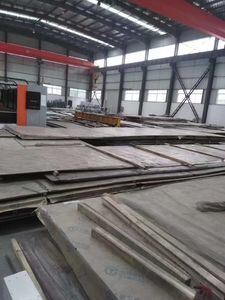
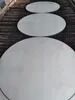
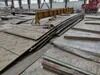
Produktdetails
| Modell Nr. | 2304 s32304 | Form | Wohnung |
|---|---|---|---|
| Technik | Warmgewalzt | Oberflächenbehandlung | In Essig einlegen |
| Spezifikation | 1220*2440, 1500*3000, 1500*6000, 2000*6000 mm | Produktionskapazität | 50000 kg |
| Chrominhalt | 23% | Nickelinhalt | 4% |
| Molybdängehalt | 0,2 % | Stickstoffgehalt | 0,1 % |
| Dichte | 7.800 kg/m3 | Streckgrenze | MPa 400 |
| Zugfestigkeit | 600 MPa | Verlängerung | 25 % |
| Härte | HV10 180-230 | ||
| Hervorheben | Warm gewalzte Edelstahl-Platte,Korrosionsbeständige Duplex-Edelstahlplatte,Platte aus Legierung 2304 mit hoher Streckgrenze |
||
Produkt-Beschreibung
Legierung 2304 Duplex-Edelstahlplatte S32304
Legierung 2304 (UNS S32304) ist ein 23%chrom, 4%nickel, molybdänfreier Duplex-Edelstahl. Diese Legierung bietet Korrosionsbeständigkeit ähnlich wie 316L,bei gleichzeitiger Mechanik mit doppelt so hoher Leistungsfestigkeit wie bei austenitischen Sorten 304L/316LDiese verbesserten Eigenschaften ermöglichen Gewichtsersparnisse bei ordnungsgemäß konzipierten Druckbehälteranwendungen.
Chemische Analyse
Typische Werte (Gewichtsprozentsatz)
| Kohlenstoff | Chrom | Nickel | Molybdän | Stickstoff | Andere |
|---|---|---|---|---|---|
| 0.020 | 23 | 4 | 0.2 | 0.1 | S = 0.001 |
Die in Anhang I der Verordnung (EG) Nr. 1907/2006 vorgesehenen Maßnahmen werden in Anhang I der Verordnung (EG) Nr. 1907/2006 festgelegt.
Mechanische Eigenschaften
Zugfähigkeit (Mindestwerte)
| °C | Rp 0,2 MPa | Rp 1,0 MPa | UTS MPa | °F | YS 0,2% Offset KSI | YS 0,1% Offset KSI | UTS KSI | Ausdehnung in % |
|---|---|---|---|---|---|---|---|---|
| 20 | 400 | 440 | 600 | 68 | 58 | 64 | 87 | 25 |
| 100 | 330 | 365 | 570 | 212 | 48 | 53 | 83 | 25 |
| 200 | 280 | 310 | 530 | 392 | 41 | 45 | 77 | 20 |
| 300 | 230 | 260 | 490 | 572 | 33 | 38 | 71 | 20 |
Werte für warmgewalzte Platten (th ≤ 2"). Legierung 2304 darf aufgrund der Niederschlagserhärtung nicht länger bei Temperaturen über 300 °C verwendet werden.
Haltbarkeitswerte (KCV-Mindestwerte)
| - Das ist Temp. | -50°C | +20°C | -60°F | +70°F |
|---|---|---|---|---|
| Einzigartig | 75 J/cm2 | 90 J/cm2 | 54 Fuß und Pfund | 65 Fuß und Pfund |
| Durchschnitt (5) | 90 J/cm2 | 150 J/cm2 | 65 Fuß und Pfund | 87 Fuß und Pfund |
Härte (typische Werte)
| Durchschnitt (5) | HV10 | HB | HRC |
|---|---|---|---|
| 180 bis 230 | 180 bis 230 | ≤ 20 |
Körperliche Eigenschaften
Dichte: 7.800 kg/m3 - 0,28 lb/in3
| Intervalltemperatur. °C | Thermische Ausdehnung α×10−6K−1 | °C | Widerstandsfähigkeit (μΩ·cm) | Wärmeleitfähigkeit (W·m−1·K−1) | Spezifische Wärme (J·kg−1·K−1) | Jungmodul E (GPa) | Scherenmodul G (GPa) |
|---|---|---|---|---|---|---|---|
| 20 bis 100 | 13 | 20 | 80 | 17 | 450 | 200 | 75 |
| 20 bis 100 | 13 | 100 | 92 | 18 | 500 | 190 | 73 |
| 20 bis 200 | 13.5 | 200 | 100 | 19 | 530 | 180 | 70 |
| 20 bis 300 | 14 | 300 | 105 | 20 | 560 | 170 | 67 |
Struktur
Die chemische Zusammensetzung von Legierung 2304 ist optimiert, um eine typische austenitische / ferritische Mikrostruktur von 50% nach einer Lösungsbrennbehandlung bei 950 °C bis 1050 °C (1742 °F bis 1922 °F) zu erzielen.Die Mikrostruktur zeigt eine außergewöhnliche Stabilität im Vergleich zu molybdänhaltigen Duplex-Edelstahlen. Intermetallische Phasen treten erst nach 10 Stunden Exposition im Temperaturbereich 750°-850°C (1382°-1562°F) auf.Erhöhung der Härte nach einer Wärmebehandlung im Bereich von 350 °C bis 500 °C (662 °F bis 932 °F).
Verarbeitung
Warmformung
Das Heißformen sollte innerhalb des Temperaturbereichs 1150°-900°C (2100°-1650°F) durchgeführt werden.Nach der Formung wird eine Lösungsbrennbehandlung bei 950°-1050°C (1742°-1922°F) empfohlen, um die Korrosionsbeständigkeit und die mechanischen Eigenschaften vollständig wiederherzustellen.Eine sorgfältige Unterstützung während des Erhitzens ist unerlässlich, um eine Kriechverformung zu verhindern.
Kaltformung
Die Legierung 2304 kann mit Standardgeräten für die Sorten 304L und 316L kalt gebildet werden.Endlösungsbrennen nach Kaltformung stellt optimale mechanische und korrosionsbeständige Eigenschaften wieder her.
Entkalkung
Verwenden Sie Standardlösungen und Pasten aus 304L/316L. Die Beikaltzeiten sind aufgrund der überlegenen Korrosionsbeständigkeit der Legierung länger als bei austenitischen Sorten.
Verarbeitbarkeit
Die doppelte Legierung 2304 zeigt eine verbesserte Bearbeitungsfähigkeit, insbesondere bei Bohrungen, mit einer Leistung, die 316LEZ entspricht.Verbesserte Korrosionsbeständigkeit und Sauberkeit ohne Zusatz von Schwefel, verbessert die lokale Korrosionsbeständigkeit.

Empfohlene Produkte