


Alle Produkte
-
Edelstahl-Streifen
-
Edelstahlblech
-
Edelstahl-Platte
-
Edelstahlrohr
-
Edelstahl-Stange
-
Galvanisierte Stahlspule
-
Stahlplatte
-
Stahlrundeisen
-
Nickellegierung
-
Nahtloses Stahlrohr
-
Edelstahl-Strahl
-
Blatt des dicken Kupferblechs
-
Kupfernes Rundeisen
-
Rundstab aus Edelstahl
-
Kanalstange aus Edelstahl
-
Edelstahlwinkelstange
-
Edelstahl-Spulenband
-
Flache Stange aus Edelstahl
-
Edelstahlkreis
-
Rohrverschraubung
-
Wasserwellen-Edelstahlblech
-
Nickellegierung und Superlegierung
-
Kaltgewalzte Stahlspule
-
Kupfer
-
Nickelbasislegierungsprodukte
-
Andere
-
 Raian IonescuMaterielle Qualität sehr gut. wir haben, zusammenzuarbeiten mehr als 10 Jahre. Sie handeln Losarten des Stahlmaterials. Alle materielle Qualitätsware. Sie Aufgabe für alle materielle Qualität. Wir planieren fortzufahren, mit ihnen in der Zukunft zusammenzuarbeiten
Korrosionsbeständige Legierung C-22 Nickelbasislegierung UNS N06022 Kaltgewalzte Bleche Plattenrohrstangen 0,4 - 20,0 mm

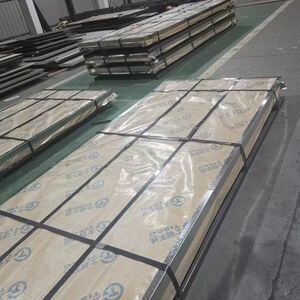
Produktdetails
| Modell Nr. | Legierung C-22 | Form | Wohnung |
|---|---|---|---|
| Technik | kaltgewalzt | Oberflächenbehandlung | Hell |
| Spezifikation | 0.4 - 20.0mm | Kohlenstoffgehalt | 0-0,01 % |
| Siliziumgehalt | 0-0,08 % | Mangan-Inhalt | 0-0,5% |
| Phosphorgehalt | 0-0,015 % | Schwefelgehalt | 0-0,005 % |
| Chrominhalt | 20,0–22,5 % | Molybdängehalt | 12,5–14,5 % |
| Nickelinhalt | 50,0–63,0 % | Eisengehalt | 2,0–6,0 % |
| Wolframinhalt | 20,5-3,5% | ||
| Hervorheben | Korrosionsbeständige Legierung C-22,Kaltgewalzte Nickel-niedrige Legierung,0.4 - 20.0mm UNS N06022 |
||
Produkt-Beschreibung
Legierung C-22 Nickelbasislegierung UNS N06022 Blech / Platte / Rohr / Balken auf Lager
HASTELLOY-Legierung C-22 ist eine Nickelchrom-Molybdän-Legierung mit erhöhter Widerstandsfähigkeit gegen Pitting, Spaltkorrosion und Spannungskorrosion.Diese Legierung widersteht der Bildung von Korngrenz-Verschüttungen in der Schweißwärme betroffenen Zone, wodurch es für den Einsatz im geschweißten Zustand geeignet ist.
C-22 zeigt eine hervorragende Beständigkeit gegenüber reduzierenden und oxidierenden Medien, was es ideal für Anwendungen macht, bei denen "aufgeregte" Bedingungen wahrscheinlich auftreten.Die Legierung hat sich als ausgezeichnete Schweißbarkeit und hohe Korrosionsbeständigkeit als Verbrauchsfilter und Elektroden erwiesen., die in Anwendungen, in denen andere korrosionsbeständige Drähte versagt haben, wirksam als Fülldraht dienen.
Aufgrund seiner Duktilität kann C-22 leicht kaltbearbeitet werden, wobei die Kaltformung die bevorzugte Formmethode ist.Die Legierung benötigt mehr Energie während der Formung, da sie im Allgemeinen steifer ist als austenitische Edelstahle. Ein 0,28" dickes Blatt in der Wärmebehandlung bei 2050°F, schnell gelöschtem Zustand, erreicht eine durchschnittliche Olsen-Tiefe von 0,49".
Chemische Zusammensetzung der Legierung C22
| Elemente | C | - Ja. | In | P | S | Die | - Das ist Mo. |
|---|---|---|---|---|---|---|---|
| Inhalt in % | - Ich habe keine Ahnung.01 | - Ich habe keine Ahnung.08 | - Ich habe keine Ahnung.5 | - Ich habe keine Ahnung.015 | - Ich habe keine Ahnung.005 | 20.0-22.5 | 12.5 bis 14.5 |
| Elemente | Ni | Co. | Fe | N | W | V | |
| Inhalt in % | 50.0-63.0 | 0-2. Wir sind hier.5 | 2.0-6.0 | 50.0-63.0 | 2.5 bis 3.5 | - Ich habe keine Ahnung.35 |
Legierung 22 Anwendbare Spezifikationen
| Formular | ASTM | ASME | VdT ÜV |
|---|---|---|---|
| - Die Bar. | B574, B5641 | SB574, SB5641 | 479 |
| Platte und Blatt | B575 | SB575 | 479 |
| Nahtlose Rohre und Rohre | B622 | SB622 | - |
| Schweißrohr | B619 | SB619 | - |
| Schweißrohr | B626 | SB626 | - |
Anweisungen für die Bearbeitung
Nickel- und Kobaltbasislegierungen sind korrosions-, temperatur- und verschleißbeständig und werden bei der Bearbeitung als moderat bis schwierig eingestuft.Diese Legierungen können mit herkömmlichen Produktionsmethoden zu zufriedenstellenden Raten bearbeitet werden.Zu den wichtigsten Überlegungen während der Bearbeitung gehören:
- Kapazität- Maschinen sollten so steif und überfordert wie möglich sein.
- Steifigkeit- Werkstück und Werkzeug sollten steif gehalten werden, wobei die Aushängigkeit des Werkzeugs minimiert wird
- Schärfe des Werkzeugs- Halten Sie immer scharfe Werkzeuge bei sich; ein 0,015 Zoll langes Verschleißgebiet gilt als stumpfes Werkzeug
- Werkzeuge- Verwenden Sie für die meisten Arbeiten Werkzeuge mit positivem Rakewinkel; für die meisten Anwendungen werden Werkzeuge mit Karbidspitze empfohlen
- Positive Kürzungen- Verwenden Sie starke, konstante Einspeisungen, um die positive Schneidwirkung aufrechtzuerhalten und zu verhindern, daß die Arbeit härter wird
- Schmierung- Lösliche Öle werden empfohlen, insbesondere bei Verwendung von Karbidwerkzeugen

Empfohlene Produkte