


Tous les produits
-
Bande d'acier inoxydable
-
Feuille d'acier inoxydable
-
Plaque d'acier inoxydable
-
tuyau d'acier inoxydable
-
Barre d'acier inoxydable
-
Bobine en acier galvanisée
-
Plaque d'acier
-
barre ronde en acier
-
alliage de nickel
-
Tuyau d'acier sans couture
-
Poutre d'acier inoxydable
-
Feuille de plat de cuivre
-
Barre ronde de cuivre
-
Barre ronde en acier inoxydable
-
Barre de canal en acier inoxydable
-
Barre d'angle en acier inoxydable
-
bande de bobine en acier inoxydable
-
Barre plate en acier inoxydable
-
Cercle en acier inoxydable
-
Raccord de tuyau
-
Feuille d'acier inoxydable d'ondulation de l'eau
-
Alliage de nickel et superalliage
-
Bobine d'acier laminée à froid
-
Cuivre
-
Produits en alliage à base de nickel
-
Autres
-
 Raian IonescuQualité matérielle très bonne. nous avons pour coopérer plus de 10 ans. Ils commercent des genres de sorts de matériel en acier. Toute la qualité matérielle bonne. Ils devoir pour toute la qualité matérielle. Nous surfaçons pour continuer à coopérer avec eux à l'avenir
Alliage résistant à la corrosion C-22 Alliage à base de nickel UNS N06022 Barres de tuyaux en tôle laminée à froid 0,4 - 20,0 mm

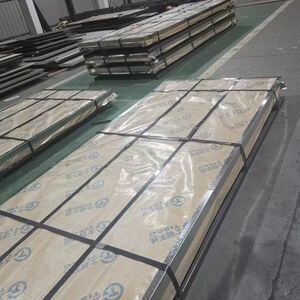
Détails sur le produit
| Numéro de modèle. | alliage c-22 | Forme | Plat |
|---|---|---|---|
| Technique | laminé à froid | Traitement de surface | Brillant |
| Spécification | 0.4 - 20.0mm | Teneur en carbone | 0-0,01% |
| Contenu en silicium | 0-0,08% | Contenu de manganèse | 0 à 0,5% |
| Contenu du phosphore | 0-0,015% | Contenu de soufre | 0-0,005% |
| contenu de chrome | 20,0-22,5% | Contenu en molybdène | 12,5-14,5% |
| Contenu en nickel | 50,0-63,0% | Contenu en fer | 2,0-6,0% |
| Contenu de tungstène | 20,5-3,5% | ||
| Mettre en évidence | Alliage résistant à la corrosion C-22,Alliage bas laminé à froid de nickel,0.4 - 20.0mm UNS N06022 |
||
Description de produit
Alliage C-22 alliage à base de nickel UNS N06022 feuille / plaque / tuyau / barres en stock
L'alliage HASTELLOY C-22 est un alliage nickel-chrome-molybdène avec une résistance accrue aux fissures, à la corrosion par fissure et à la fissuration par corrosion par contrainte.Cet alliage résiste à la formation de précipitations de grains de bord dans la zone affectée par la chaleur de soudure, ce qui le rend adapté à une utilisation en état soudé.
Le C-22 démontre une résistance exceptionnelle à la fois aux milieux réducteurs et oxydants, ce qui le rend idéal pour les applications où des conditions " dérangées " sont susceptibles de se produire.L'alliage a démontré une excellente soudabilité et une résistance élevée à la corrosion en tant que fils et électrodes de remplissage consommables, servant efficacement de fil de remplissage dans les applications où d'autres fils résistants à la corrosion ont échoué.
En raison de sa ductilité, le C-22 peut être facilement travaillé à froid, la formation à froid étant la méthode de formage préférée.L'alliage nécessite plus d'énergie pendant la formation car il est généralement plus rigide que les aciers inoxydables austénitiquesUne feuille d'épaisseur de 0,28" dans le traitement thermique à 2050°F, condition d'assouplissement rapide, atteint une profondeur moyenne de tasse olsen de 0,49".
Composition chimique de l'alliage C22
| Élément | C | Je sais. | Nom de l'entreprise | P | S | Cr | Je vous en prie. |
|---|---|---|---|---|---|---|---|
| Contenu en % | Je suis à 0-0.01 | Je suis à 0-0.08 | Je suis à 0-0.5 | Je suis à 0-0.015 | Je suis à 0-0.005 | 20.0 à 22.5 | 12.5 à 14.5 |
| Élément | Je ne sais pas | Co. | Le Fe | N | W | V | |
| Contenu en % | 50.0 à 63.0 | 0 à 2.5 | 2.0 à 6.0 | 50.0 à 63.0 | 2.5 à 3.5 | Je suis à 0-0.35 |
L'alliage 22 spécifications applicables
| Le formulaire | Pour l'ASTM | Le code ASME | VdT ÜV |
|---|---|---|---|
| Une barre | B574, B5641 | Le montant de la subvention est calculé à partir du montant de la subvention. | 479 |
| Plaque et feuille | B575 | Résultats de l'enquête | 479 |
| Pièces et tubes sans soudure | B622 | SB622 | - |
| Pièces soudées | B619 | SB619 | - |
| Tubes soudés | B626 | SB626 | - |
Lignes directrices pour l'usinage
Les alliages à base de nickel et de cobalt résistant à la corrosion, à la température et à l'usure sont classés comme modérés à difficiles à l'usinage.Ces alliages peuvent être usinés à des taux satisfaisants par des méthodes de production conventionnelles.Les principales considérations à prendre en compte lors des opérations d'usinage sont:
- Capacité- Les machines doivent être rigides et surchargées autant que possible
- Rigidité- La pièce de travail et l'outil doivent être maintenus rigides avec un surplomb d'outil minimisé
- Poids de l'outil- Gardez les outils tranchants en tout temps; un terrain d'usure de 0,015 pouces est considéré comme un outil terne
- Outils- Utiliser des outils à angle de ramage positif pour la plupart des opérations; des outils à pointe de carbure sont suggérés pour la plupart des applications
- Des coupes positives- Utiliser des engrais lourds et constants pour maintenir l'action de coupe positive et prévenir le durcissement du travail
- Lubrification- Il est recommandé d'utiliser des huiles solubles, en particulier pour les outils en carbure.

produits recommandés