


All Products
-
Stainless Steel Strip
-
Stainless Steel Sheet
-
Stainless Steel Plate
-
Stainless Steel Pipe
-
Stainless Steel Bar
-
Galvanized Steel Coil
-
Steel Plate
-
Steel Round Bar
-
Nickel Alloy
-
Seamless Steel Pipe
-
Stainless Steel Beam
-
Copper Plate Sheet
-
Copper Round Bar
-
stainless steel round bar
-
stainless steel channel bar
-
stainless steel angle bar
-
stainless steel coil strip
-
stainless steel flat bar
-
stainless steel circle
-
Pipe Fitting
-
Water Ripple Stainless Steel Sheet
-
Nickel Alloy and Super Alloy
-
cold rolled steel coil
-
copper
-
Nickel Base Alloy Products
-
Others
-
 Raian IonescuMaterial quality very good. we have cooperate more than 10 Years. They trade lots kinds of steel material. All material quality good. They duty for all material quality. We are planing continue cooperate with them in the future
Corrosion Resistant Alloy C-22 Nickel Base Alloy UNS N06022 Cold Rolled Sheet Plate Pipe Bars 0.4 - 20.0mm

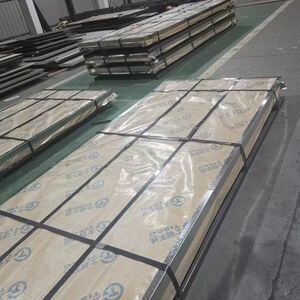
Product Details
| Model NO. | Alloy C-22 | Shape | Flat |
|---|---|---|---|
| Technique | Cold Rolled | Surface Treatment | Bright |
| Specification | 0.4 - 20.0mm | Carbon Content | 0-0.01% |
| Silicon Content | 0-0.08% | Manganese Content | 0-0.5% |
| Phosphorus Content | 0-0.015% | Sulfur Content | 0-0.005% |
| Chromium Content | 20.0-22.5% | Molybdenum Content | 12.5-14.5% |
| Nickel Content | 50.0-63.0% | Iron Content | 2.0-6.0% |
| Tungsten Content | 2.5-3.5% | ||
| Highlight | Corrosion Resistant Alloy C-22,Cold Rolled Nickel Base Alloy,0.4 - 20.0mm UNS N06022 |
||
Product Description
Alloy C-22 Nickel Base Alloy UNS N06022 Sheet / Plate / Pipe / Bars in Stock
HASTELLOY Alloy C-22 is a nickel-chromium-molybdenum alloy with enhanced resistance to pitting, crevice corrosion, and stress corrosion cracking. This alloy resists the formation of grain boundary precipitates in the weld-heat affected zone, making it suitable for use in the as-welded condition.
C-22 demonstrates outstanding resistance to both reducing and oxidizing media, making it ideal for applications where "upset" conditions are likely to occur. The alloy has proven excellent weldability and high corrosion resistance as consumable filler wires and electrodes, serving effectively as filler wire in applications where other corrosion-resistant wires have failed.
Due to its ductility, C-22 can be easily cold-worked, with cold-forming being the preferred method of forming. The alloy requires more energy during forming as it is generally stiffer than austenitic stainless steels. A 0.28" thick sheet in the heat-treated at 2050°F, rapid quenched condition, achieves an average olsen cup depth of 0.49".
Chemical Composition of Alloy C22
| Element | C | Si | Mn | P | S | Cr | Mo |
|---|---|---|---|---|---|---|---|
| Content % | 0-0.01 | 0-0.08 | 0-0.5 | 0-0.015 | 0-0.005 | 20.0-22.5 | 12.5-14.5 |
| Element | Ni | Co | Fe | N | W | V | |
| Content % | 50.0-63.0 | 0-2.5 | 2.0-6.0 | 50.0-63.0 | 2.5-3.5 | 0-0.35 |
Alloy 22 Applicable Specifications
| Form | ASTM | ASME | VdT ÜV |
|---|---|---|---|
| Bar | B574, B5641 | SB574, SB5641 | 479 |
| Plate & Sheet | B575 | SB575 | 479 |
| Seamless Pipe & Tube | B622 | SB622 | - |
| Welded Pipe | B619 | SB619 | - |
| Welded Tube | B626 | SB626 | - |
Machining Guidelines
Nickel and cobalt base corrosion, temperature, and wear-resistant alloys are classified as moderate to difficult when machining. However, these alloys can be machined using conventional production methods at satisfactory rates. Key considerations during machining operations include:
- Capacity - Machines should be rigid and overpowered as much as possible
- Rigidity - Work piece and tool should be held rigid with minimized tool overhang
- Tool Sharpness - Maintain sharp tools at all times; a 0.015 inch wear land is considered a dull tool
- Tools - Use positive rake angle tools for most operations; carbide-tipped tools are suggested for most applications
- Positive Cuts - Use heavy, constant feeds to maintain positive cutting action and prevent work hardening
- Lubrication - Soluble oils are recommended, especially when using carbide tooling

Recommended Products