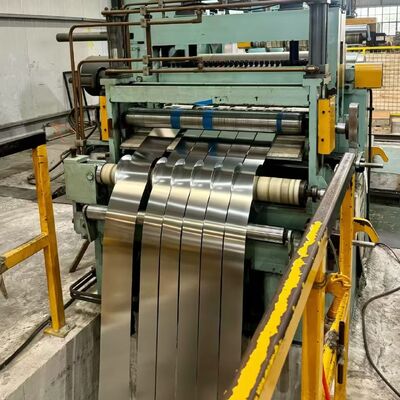
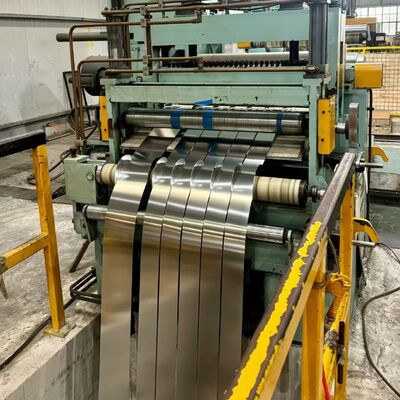
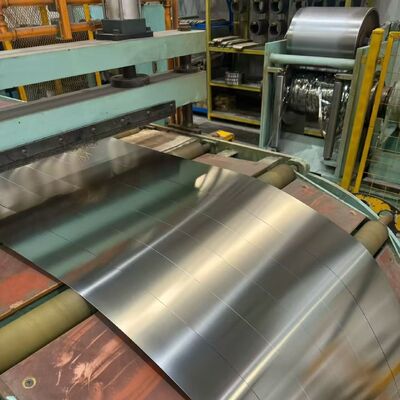
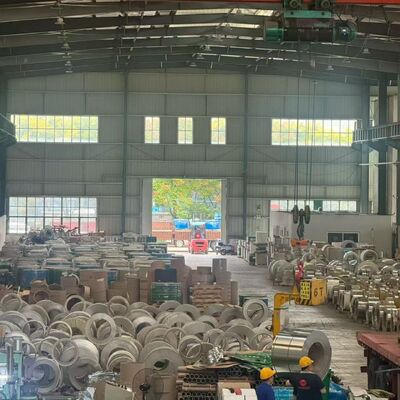
SUS316L Stainless Steel Strips Thickness 0.1mm 0.12mm 0.15mm 0.2mm SS Strips Customs Width Slit Cutting Without Burr
Products Specification
| Products |
stainless steel strip |
| Thickness |
0.1-3.0mm |
| Width |
minimum width 5mm |
| MOQ |
20 kgs |
| Main Grade |
201 301 304 304L 309S 310S 316L 316Ti 410 420 430 436 439 441 444 440A/B/C,2205,2507,904L,C276,400,600,625,926,825.etc |
| Surface |
BA 2B |
| Standard |
ASTM EN GB JIS |
| Packing |
wooden frame and water proof paper |
JIS G4305 SUS304 Stainless Steel Strips Thickness 0.1 - 3.0mm – Precision Slit Cutting Edge for Spring Applications Product Overview SUS304 stainless steel strips, manufactured in strict compliance with the JIS G4305:2021 standard, represent one of the most widely used austenitic stainless steel grades in precision engineering and industrial applications. With a thickness range of 0.1 mm to 3.0 mm, these cold-rolled strips are specially processed with precision slit cutting edges, making them ideal for high-performance components such as springs, connectors, terminals, and electronic parts. SUS304 (also known internationally as AISI 304 or UNS S30400) offers an excellent balance of corrosion resistance, formability, weldability, and mechanical strength. Its composition—typically 18% chromium and 8% nickel—ensures superior performance in both ambient and mildly aggressive environments, including food processing, medical devices, automotive systems, and consumer electronics. This product page provides comprehensive technical specifications, chemical composition, mechanical properties, and application guidance for engineers, procurement specialists, and manufacturers seeking reliable, high-tolerance stainless steel strip material. Key Features & Advantages ✅ Compliance: Fully conforms to JIS G4305:2021 (Cold-Rolled Stainless Steel Plate, Sheet, and Strip) ✅ Precision Slitting: Edge tolerance ±0.01 mm; burr-free finish for automated assembly ✅ Thickness Range: 0.1 mm – 3.0 mm (customizable upon request) ✅ Width Options: 5 mm – 600 mm (standard); narrower widths available for micro-spring applications ✅ Surface Finish: 2B, BA (Bright Annealed), or custom finishes (e.g., hairline, matte) ✅ Excellent Spring Properties: High fatigue resistance and elastic recovery after repeated deflection ✅ Corrosion Resistance: Resists oxidation up to 800°C; suitable for humid, saline, and mildly acidic environments ✅ Non-Magnetic (Annealed State): Ideal for sensitive electronic and medical instruments Technical Specifications Parameter Specification Standard JIS G4305:2021 Material Grade SUS304 (Japanese Industrial Standard) Equivalent Grades AISI 304 (USA), X5CrNi18-10 (EN), 1.4301 (DIN), 06Cr19Ni10 (GB/T) Form Cold-rolled stainless steel strip Thickness Range 0.1 mm – 3.0 mm Width Range 5 mm – 600 mm (precision slit to ±0.05 mm tolerance) Tolerance (Thickness) ±0.005 mm (for <0.5 mm); ±1% (for ≥0.5 mm) Edge Condition Precision slit, deburred, no edge cracks Surface Finish 2B (standard), BA (Bright Annealed), HL (Hairline), or customer-specified Temper Condition Annealed (soft), 1/4H, 1/2H, H, EH, SH (spring temper available) Density 7.93 g/cm³ Magnetic Property Non-magnetic in annealed condition; may become slightly magnetic after cold work Chemical Composition (JIS G4303 / JIS G4311) The chemical composition of SUS304 is tightly controlled to ensure consistent performance: Element Content (%) – Max/Min Carbon (C) ≤ 0.08 Silicon (Si) ≤ 1.00 Manganese (Mn) ≤ 2.00 Phosphorus (P) ≤ 0.045 Sulfur (S) ≤ 0.030 Chromium (Cr) 18.0 – 20.0 Nickel (Ni) 8.0 – 10.5 Iron (Fe) Balance Note: All values comply with JIS G4303-1998 and JIS G4311-1991 standards. Mechanical Properties (Typical Values – Annealed Condition) Property Value Tensile Strength 515 – 720 MPa Yield Strength (0.2% offset) ≥ 205 MPa Elongation (in 50 mm) ≥ 40% Hardness (HV) 150 – 200 Modulus of Elasticity ~193 GPa Thermal Conductivity 16.2 W/m·K (at 100°C) Coefficient of Thermal Expansion 17.2 µm/m·°C (20–100°C) For spring applications, strips are often supplied in 1/2 Hard (H) or Full Hard (EH/SH) tempers, offering higher yield strength (up to 1000 MPa) and improved resilience. Why Choose Precision-Slit SUS304 Strips for Springs? Springs require materials that can endure repeated stress cycles without permanent deformation. SUS304 stainless steel strips offer: High Elastic Limit: Maintains shape integrity under dynamic loading. Fatigue Resistance: Performs reliably in high-cycle applications (e.g., battery contacts, relay springs). Clean Edges: Precision slitting eliminates micro-cracks and burrs that could initiate fatigue failure. Corrosion Protection: Unlike carbon steel springs, SUS304 does not require plating or coating in most environments. Biocompatibility: Meets ISO 10993 standards for medical implant components (when properly finished). Common spring types made from SUS304 strips include: Contact springs (electronics) Clip springs (automotive interiors) Torsion springs (small appliances) Flat spiral springs (watches, sensors) Manufacturing & Quality Control Our SUS304 strips are produced using advanced continuous cold rolling and annealing lines, followed by laser-guided precision slitting. Each coil undergoes rigorous quality checks: Dimensional Accuracy: Verified via laser micrometers and optical edge scanners. Surface Inspection: Automated vision systems detect scratches, pits, or roll marks. Material Certification: Mill Test Reports (MTRs) provided per EN 10204 3.1 or 3.2. Batch Traceability: Full heat number tracking from melt to final coil. Optional value-added services: Custom Packaging: Plastic-wrapped coils on wooden pallets for export. Edge Conditioning: Rounded or chamfered edges for high-speed stamping. Lubricant-Free Surface: For cleanroom or medical-grade applications. Applications Industry Use Cases Electronics Battery contacts, SIM card trays, switch springs, EMI shielding strips Automotive Seat belt retractors, sensor springs, fuel injector components Medical Surgical instrument parts, implantable device springs, diagnostic equipment Industrial Valve springs, pressure sensors, filtration mesh Consumer Goods Eyeglass frames, watch bands, kitchen appliance hinges Ordering Information To place an order or request a sample, please provide the following details: Grade: SUS304 (JIS G4305) Thickness: e.g., 0.25 mm ±0.005 mm Width: e.g., 12.5 mm ±0.05 mm Temper: Annealed / 1/2H / Spring Temper (specify if for spring use) Surface Finish: 2B / BA / Custom Coil ID: 200 mm, 300 mm, or 508 mm (20”) Weight per Coil: Typically 10–50 kg (adjustable) Packaging: VCI paper + plastic wrap + export crate Minimum Order Quantity (MOQ): 100 kg Lead Time: 7–15 days (depending on specification) FAQs Q: Is SUS304 the same as 304 stainless steel? A: Yes. SUS304 is the Japanese designation (JIS standard), while 304 is the AISI/ASTM designation. Chemical and mechanical properties are nearly identical. Q: Can SUS304 strips be used in marine environments? A: SUS304 offers good resistance to atmospheric corrosion but may pit in prolonged seawater exposure. For harsh marine use, consider SUS316L. Q: What’s the difference between 2B and BA finish? A: 2B is a standard mill finish with moderate reflectivity. BA (Bright Annealed) is highly reflective, smooth, and ideal for decorative or optical applications. Q: Do you provide RoHS/REACH compliance documentation? A: Yes. All our SUS304 strips are compliant with RoHS, REACH, and conflict minerals regulations. Conclusion JIS G4305 SUS304 stainless steel strips (0.1–3.0 mm) with precision slit edges deliver unmatched reliability for spring and precision component manufacturing. Backed by stringent quality control, international standards compliance, and customizable processing, they are the material of choice for engineers demanding durability, consistency, and performance. Whether you're designing micro-electronic contacts or automotive safety mechanisms, our SUS304 strips ensure your products meet the highest functional and aesthetic standards.JIS G4305 SUS304 Stainless Steel Strips Thickness 0.1 - 3.0mm – Precision Slit Cutting Edge for Spring Applications Product Overview SUS304 stainless steel strips, manufactured in strict compliance with the JIS G4305:2021 standard, represent one of the most widely used austenitic stainless steel grades in precision engineering and industrial applications. With a thickness range of 0.1 mm to 3.0 mm, these cold-rolled strips are specially processed with precision slit cutting edges, making them ideal for high-performance components such as springs, connectors, terminals, and electronic parts. SUS304 (also known internationally as AISI 304 or UNS S30400) offers an excellent balance of corrosion resistance, formability, weldability, and mechanical strength. Its composition—typically 18% chromium and 8% nickel—ensures superior performance in both ambient and mildly aggressive environments, including food processing, medical devices, automotive systems, and consumer electronics. This product page provides comprehensive technical specifications, chemical composition, mechanical properties, and application guidance for engineers, procurement specialists, and manufacturers seeking reliable, high-tolerance stainless steel strip material. Key Features & Advantages ✅ Compliance: Fully conforms to JIS G4305:2021 (Cold-Rolled Stainless Steel Plate, Sheet, and Strip) ✅ Precision Slitting: Edge tolerance ±0.01 mm; burr-free finish for automated assembly ✅ Thickness Range: 0.1 mm – 3.0 mm (customizable upon request) ✅ Width Options: 5 mm – 600 mm (standard); narrower widths available for micro-spring applications ✅ Surface Finish: 2B, BA (Bright Annealed), or custom finishes (e.g., hairline, matte) ✅ Excellent Spring Properties: High fatigue resistance and elastic recovery after repeated deflection ✅ Corrosion Resistance: Resists oxidation up to 800°C; suitable for humid, saline, and mildly acidic environments ✅ Non-Magnetic (Annealed State): Ideal for sensitive electronic and medical instruments Technical Specifications Parameter Specification Standard JIS G4305:2021 Material Grade SUS304 (Japanese Industrial Standard) Equivalent Grades AISI 304 (USA), X5CrNi18-10 (EN), 1.4301 (DIN), 06Cr19Ni10 (GB/T) Form Cold-rolled stainless steel strip Thickness Range 0.1 mm – 3.0 mm Width Range 5 mm – 600 mm (precision slit to ±0.05 mm tolerance) Tolerance (Thickness) ±0.005 mm (for <0.5 mm); ±1% (for ≥0.5 mm) Edge Condition Precision slit, deburred, no edge cracks Surface Finish 2B (standard), BA (Bright Annealed), HL (Hairline), or customer-specified Temper Condition Annealed (soft), 1/4H, 1/2H, H, EH, SH (spring temper available) Density 7.93 g/cm³ Magnetic Property Non-magnetic in annealed condition; may become slightly magnetic after cold work Chemical Composition (JIS G4303 / JIS G4311) The chemical composition of SUS304 is tightly controlled to ensure consistent performance: Element Content (%) – Max/Min Carbon (C) ≤ 0.08 Silicon (Si) ≤ 1.00 Manganese (Mn) ≤ 2.00 Phosphorus (P) ≤ 0.045 Sulfur (S) ≤ 0.030 Chromium (Cr) 18.0 – 20.0 Nickel (Ni) 8.0 – 10.5 Iron (Fe) Balance Note: All values comply with JIS G4303-1998 and JIS G4311-1991 standards. Mechanical Properties (Typical Values – Annealed Condition) Property Value Tensile Strength 515 – 720 MPa Yield Strength (0.2% offset) ≥ 205 MPa Elongation (in 50 mm) ≥ 40% Hardness (HV) 150 – 200 Modulus of Elasticity ~193 GPa Thermal Conductivity 16.2 W/m·K (at 100°C) Coefficient of Thermal Expansion 17.2 µm/m·°C (20–100°C) For spring applications, strips are often supplied in 1/2 Hard (H) or Full Hard (EH/SH) tempers, offering higher yield strength (up to 1000 MPa) and improved resilience. Why Choose Precision-Slit SUS304 Strips for Springs? Springs require materials that can endure repeated stress cycles without permanent deformation. SUS304 stainless steel strips offer: High Elastic Limit: Maintains shape integrity under dynamic loading. Fatigue Resistance: Performs reliably in high-cycle applications (e.g., battery contacts, relay springs). Clean Edges: Precision slitting eliminates micro-cracks and burrs that could initiate fatigue failure. Corrosion Protection: Unlike carbon steel springs, SUS304 does not require plating or coating in most environments. Biocompatibility: Meets ISO 10993 standards for medical implant components (when properly finished). Common spring types made from SUS304 strips include: Contact springs (electronics) Clip springs (automotive interiors) Torsion springs (small appliances) Flat spiral springs (watches, sensors) Manufacturing & Quality Control Our SUS304 strips are produced using advanced continuous cold rolling and annealing lines, followed by laser-guided precision slitting. Each coil undergoes rigorous quality checks: Dimensional Accuracy: Verified via laser micrometers and optical edge scanners. Surface Inspection: Automated vision systems detect scratches, pits, or roll marks. Material Certification: Mill Test Reports (MTRs) provided per EN 10204 3.1 or 3.2. Batch Traceability: Full heat number tracking from melt to final coil. Optional value-added services: Custom Packaging: Plastic-wrapped coils on wooden pallets for export. Edge Conditioning: Rounded or chamfered edges for high-speed stamping. Lubricant-Free Surface: For cleanroom or medical-grade applications. Applications Industry Use Cases Electronics Battery contacts, SIM card trays, switch springs, EMI shielding strips Automotive Seat belt retractors, sensor springs, fuel injector components Medical Surgical instrument parts, implantable device springs, diagnostic equipment Industrial Valve springs, pressure sensors, filtration mesh Consumer Goods Eyeglass frames, watch bands, kitchen appliance hinges Ordering Information To place an order or request a sample, please provide the following details: Grade: SUS304 (JIS G4305) Thickness: e.g., 0.25 mm ±0.005 mm Width: e.g., 12.5 mm ±0.05 mm Temper: Annealed / 1/2H / Spring Temper (specify if for spring use) Surface Finish: 2B / BA / Custom Coil ID: 200 mm, 300 mm, or 508 mm (20”) Weight per Coil: Typically 10–50 kg (adjustable) Packaging: VCI paper + plastic wrap + export crate Minimum Order Quantity (MOQ): 100 kg Lead Time: 7–15 days (depending on specification) FAQs Q: Is SUS304 the same as 304 stainless steel? A: Yes. SUS304 is the Japanese designation (JIS standard), while 304 is the AISI/ASTM designation. Chemical and mechanical properties are nearly identical. Q: Can SUS304 strips be used in marine environments? A: SUS304 offers good resistance to atmospheric corrosion but may pit in prolonged seawater exposure. For harsh marine use, consider SUS316L. Q: What’s the difference between 2B and BA finish? A: 2B is a standard mill finish with moderate reflectivity. BA (Bright Annealed) is highly reflective, smooth, and ideal for decorative or optical applications. Q: Do you provide RoHS/REACH compliance documentation? A: Yes. All our SUS304 strips are compliant with RoHS, REACH, and conflict minerals regulations. Conclusion JIS G4305 SUS304 stainless steel strips (0.1–3.0 mm) with precision slit edges deliver unmatched reliability for spring and precision component manufacturing. Backed by stringent quality control, international standards compliance, and customizable processing, they are the material of choice for engineers demanding durability, consistency, and performance. Whether you're designing micro-electronic contacts or automotive safety mechanisms, our SUS304 strips ensure your products meet the highest functional and aesthetic standards.
SUS316L Stainless Steel Strips: Precision in Thin-Gauge Applications
SUS316L stainless steel strips—available in thicknesses of 0.1 mm, 0.12 mm, 0.15 mm, and 0.2 mm—are engineered for high-performance applications that demand exceptional corrosion resistance, mechanical stability, and surface integrity. These ultra-thin strips are commonly supplied in custom widths through precision slit cutting processes that eliminate burrs, ensuring edge smoothness critical for downstream manufacturing. This article explores the material properties, production techniques, dimensional specifications, and industrial applications of SUS316L stainless steel strips, supported by a detailed comparison table.
1. Material Overview: What Is SUS316L?
SUS316L is the Japanese Industrial Standard (JIS) designation for a low-carbon variant of Type 316 austenitic stainless steel. The “L” suffix indicates a maximum carbon content of 0.03%, which significantly reduces the risk of carbide precipitation during welding or high-temperature exposure. This makes SUS316L ideal for welded structures and corrosive environments where standard 316 might suffer from intergranular corrosion.
Key alloying elements include:
- Chromium (16–18%): Provides oxidation and corrosion resistance.
- Nickel (10–14%): Enhances ductility and stabilizes the austenitic structure.
- Molybdenum (2–3%): Improves resistance to pitting and crevice corrosion, especially in chloride-rich environments (e.g., seawater or chemical processing).
- Low carbon (<0.03%): Prevents sensitization during thermal cycles.
These properties make SUS316L one of the most widely used stainless steels in demanding sectors such as medical devices, semiconductor manufacturing, aerospace, and marine engineering.
2. Thin-Gauge Strip Specifications
The availability of SUS316L in ultra-thin gauges—specifically 0.1 mm, 0.12 mm, 0.15 mm, and 0.2 mm—caters to industries requiring miniaturization, flexibility, and precision. These dimensions fall within the realm of foil and fine strip metallurgy, where tolerances are tight and surface quality is paramount.
| Thickness (mm) |
Typical Tolerance (±mm) |
Common Width Range |
Surface Finish Options |
Mechanical Strength (Approx. UTS) |
| 0.10 |
±0.005 |
5–300 mm |
2B, BA, HL, Mirror |
550–700 MPa |
| 0.12 |
±0.006 |
5–350 mm |
2B, BA, HL |
540–690 MPa |
| 0.15 |
±0.007 |
10–400 mm |
2B, BA, Polished |
530–680 MPa |
| 0.20 |
±0.010 |
10–500 mm |
2B, BA, HL, Brushed |
520–670 MPa |
Notes:
- 2B: Standard mill finish with moderate reflectivity.
- BA (Bright Annealed): Highly reflective, smooth surface achieved in controlled atmosphere annealing.
- HL (Hairline): Directional brushed finish for aesthetic and fingerprint-resistant applications.
- Tolerances may vary based on customer requirements and production capabilities.
3. Slit Cutting and Burr-Free Edge Technology
One of the defining features of high-quality SUS316L strips is the precision slit cutting process. Slitting involves unwinding a master coil and passing it through rotary knives to produce narrower strips of exact width. For thin-gauge materials like 0.1–0.2 mm, this process demands extreme control to avoid deformation, edge waviness, or micro-burrs.
Why Burr-Free Edges Matter:
- In medical device manufacturing (e.g., stents, catheters), even microscopic burrs can cause tissue damage or interfere with assembly.
- In electronics and battery components, burrs may lead to short circuits or contamination.
- In optical or sensor applications, edge imperfections can scatter light or disrupt signal integrity.
Advanced slitting lines equipped with laser-guided alignment, diamond-coated blades, and real-time vision inspection systems ensure consistent edge quality. Post-slitting treatments—such as edge rounding or electrochemical deburring—may be applied for mission-critical uses.
4. Custom Width Capabilities
Manufacturers offer SUS316L strips in custom widths, typically ranging from 5 mm to 500 mm, depending on the thickness. Narrower widths (e.g., 5–20 mm) are common in precision springs, sensors, and micro-electromechanical systems (MEMS). Wider strips (100–500 mm) serve as feedstock for stamping, etching, or roll-forming operations.
Customization extends beyond width:
- Length: Supplied in coils (standard) or cut-to-length pieces.
- Temper: From fully annealed (soft) to 1/4H, 1/2H, or full hard, tailored to springback or formability needs.
- Packaging: Vacuum-sealed or VCI-wrapped to prevent surface oxidation during transit.
5. Key Industrial Applications
Medical & Pharmaceutical
- Surgical instruments, implantable devices (e.g., guidewires), and drug delivery components benefit from SUS316L’s biocompatibility and sterilization resistance.
- Thin strips enable minimally invasive designs with high fatigue resistance.
Electronics & Semiconductors
- Used in lead frames, connectors, and shielding due to non-magnetic properties and cleanroom compatibility.
- 0.1–0.15 mm strips are ideal for flexible circuits and battery current collectors.
Automotive & Aerospace
- Fuel cell bipolar plates, sensor housings, and exhaust gaskets leverage corrosion resistance at elevated temperatures.
- Weight-sensitive applications favor ultra-thin gauges without sacrificing durability.
Chemical Processing
- Linings, diaphragms, and filtration meshes in aggressive chemical environments rely on molybdenum-enhanced corrosion protection.
6. Quality Assurance and Standards Compliance
Reputable suppliers certify SUS316L strips to international standards:
- JIS G 4305 (Japan)
- ASTM A240/A666 (USA)
- EN 10088-2 (Europe)
Material test reports (MTRs) typically include:
- Chemical composition (verified via spectrometry)
- Mechanical properties (tensile strength, elongation)
- Dimensional accuracy
- Surface defect inspection (per ISO 8501 or customer-specific criteria)
Non-destructive testing (NDT), such as eddy current or ultrasonic scanning, may be employed for critical applications.
7. Advantages Over Alternatives
Compared to SUS304 or other stainless grades, SUS316L offers:
- Superior resistance to chlorides and acids.
- Better performance in welded or heat-affected zones.
- Enhanced longevity in marine or coastal installations.
While more expensive than 304, its lifecycle cost is often lower in corrosive settings due to reduced maintenance and failure rates.
Conclusion
SUS316L stainless steel strips in 0.1 mm to 0.2 mm thicknesses represent the convergence of advanced metallurgy and precision engineering. Their combination of corrosion resistance, mechanical reliability, and burr-free edge quality—delivered in custom widths—makes them indispensable across high-tech industries. As demand grows for smaller, smarter, and more durable components, the role of ultra-thin SUS316L strips will only expand, driven by innovations in slitting technology and material science.




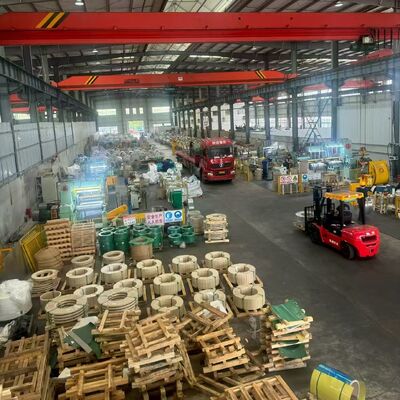
 Raian IonescuMaterial quality very good. we have cooperate more than 10 Years. They trade lots kinds of steel material. All material quality good. They duty for all material quality. We are planing continue cooperate with them in the future