-
Raian Ionescuよい物質的な質非常に。私達は協力することを持っている10年以上。それらはロットの種類の鋼鉄材料を交換する。よいすべての物質的な質。それらすべての物質的な質のための義務。私達はそれらに将来協力し続けるために平になっている
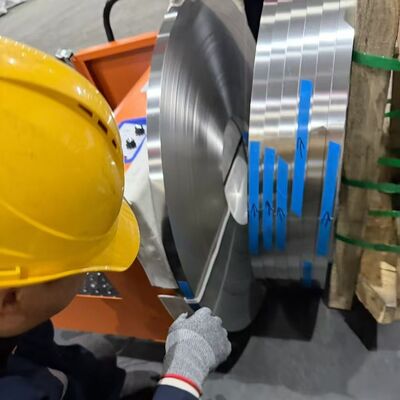
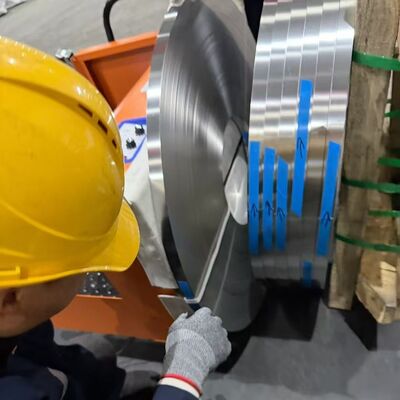
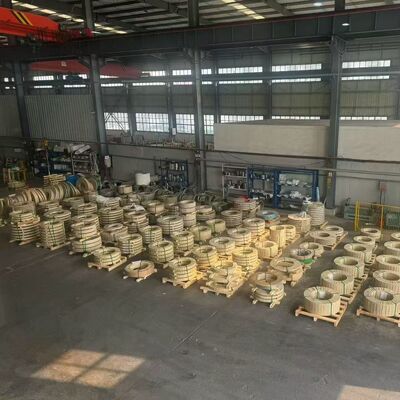
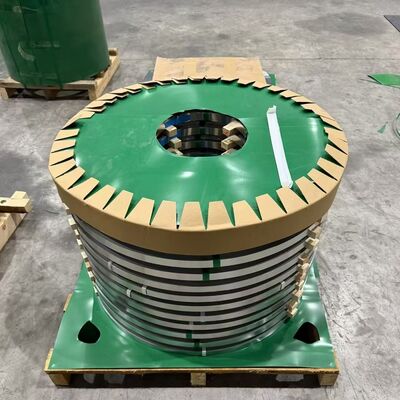
Precision Stainless Steel Strips Grade SUS304 , 304 , 1.4301 SS Strip Coils EN10204-3.1 Certificated
試供品およびクーポンのための私に連絡しなさい。
Whatsapp:0086 18588475571
Wechat: 0086 18588475571
Skype: sales10@aixton.com
心配があれば、私達は24時間のオンライン・ヘルプを提供する。
x| 製品 | ステンレス鋼のストリップ | 厚さ | 0.1-3.0mm |
|---|---|---|---|
| 幅 | 1219mm以内 | MOQ | 20キログラム |
| 学年 | 200シリーズ300シリーズ300シリーズ | 表面 | BA 2B No.4 HL 8K No.1 |
| 標準 | astm en gb jis | パッキング | 木製のフレームと防水紙 |
| ハイライト | SUS304 stainless steel strip,304 stainless steel strip coil,EN10204-3.1 certified steel strip |
||
Precision Stainless Steel Strips Grade SUS304 , 304 , 1.4301 SS Strip Coils EN10204-3.1 Certificated
| Products | stainless steel strip |
| Thickness | 0.1-3.0mm |
| Width | minimum width 5mm |
| MOQ | 20 kgs |
| Main Grade | 201 301 304 304L 309S 310S 316L 316Ti 410 420 430 436 439 441 444 440A/B/C,2205,2507,904L,C276,400,600,625,926,825.etc |
| Surface | BA 2B |
| Standard | ASTM EN GB JIS |
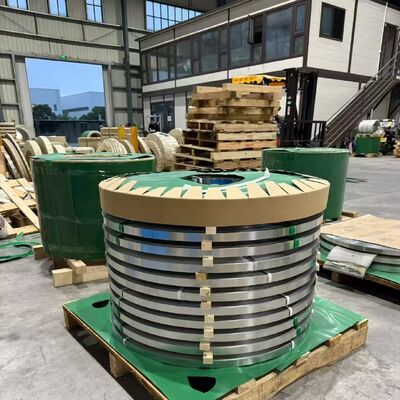
| Packing | wooden frame and water proof paper |
Precision Stainless Steel Strips – Grade SUS304 / 304 / 1.4301: High-Quality SS Strip Coils with EN 10204 3.1 Certification
Stainless steel remains one of the most versatile and widely used materials in modern industrial applications, thanks to its exceptional corrosion resistance, mechanical strength, formability, and aesthetic appeal. Among the many stainless steel grades available, SUS304 (also known internationally as AISI 304 or EN 1.4301) stands out as the most common and reliable austenitic stainless steel. Precision stainless steel strips made from this grade are essential components in sectors ranging from electronics and automotive to medical devices and food processing. When these strips are supplied in coil form and accompanied by an EN 10204 3.1 certification, they meet stringent quality assurance standards required for critical applications.
Material Overview: SUS304 / 304 / 1.4301
SUS304 is the Japanese Industrial Standard (JIS) designation, while 304 is the American Iron and Steel Institute (AISI) nomenclature, and 1.4301 is the European Norm (EN) number under the DIN/EN system. Despite the different naming conventions, all three refer to the same base alloy composition:
- Chromium (Cr): 18–20%
- Nickel (Ni): 8–10.5%
- Carbon (C): ≤ 0.07%
- Manganese (Mn): ≤ 2.0%
- Silicon (Si): ≤ 1.0%
- Phosphorus (P): ≤ 0.045%
- Sulfur (S): ≤ 0.030%
- Iron (Fe): Balance
This composition delivers an optimal balance of corrosion resistance, weldability, and ductility. The presence of chromium forms a passive oxide layer on the surface that protects against oxidation and chemical attack, while nickel stabilizes the austenitic structure, ensuring excellent toughness even at cryogenic temperatures.
Precision Stainless Steel Strips: Definition and Characteristics
Precision stainless steel strips are cold-rolled products manufactured to extremely tight dimensional tolerances—often within ±0.005 mm in thickness and ±0.05 mm in width. These strips typically range in thickness from 0.05 mm to 3.0 mm and in widths from 5 mm to 600 mm, though custom dimensions are available based on application needs.
Key characteristics of precision SUS304 strips include:
- High Surface Quality: Available in various finishes such as 2B, BA (bright annealed), No.4, and mirror polish, depending on end-use requirements.
- Excellent Formability: Ideal for deep drawing, bending, stamping, and other secondary fabrication processes.
- Consistent Mechanical Properties: Tensile strength typically ranges from 515–720 MPa, with elongation of 40–60%, ensuring reliability in dynamic applications.
- Non-Magnetic (in annealed condition): Important for electronic and sensor-based applications where magnetic interference must be avoided.
Applications Across Industries
The versatility of SUS304 precision strips enables their use in a broad spectrum of industries:
- Electronics & Electrical Engineering: Used in connectors, terminals, battery tabs, shielding components, and flexible printed circuits due to their conductivity stability and corrosion resistance.
- Automotive: Employed in fuel injection systems, sensors, gaskets, and exhaust components where durability under thermal cycling is critical.
- Medical Devices: Ideal for surgical instruments, implantable components (non-load-bearing), and diagnostic equipment owing to biocompatibility and sterilizability.
- Food & Beverage Processing: Compliant with hygiene standards (e.g., FDA, EC1935/2004), used in conveyor belts, cutting blades, and packaging machinery.
- Aerospace & Defense: Utilized in non-structural but high-reliability parts requiring resistance to atmospheric and mild chemical exposure.
EN 10204 3.1 Certification: Ensuring Traceability and Compliance
One of the most critical aspects of sourcing precision stainless steel strips for regulated or safety-critical applications is material certification. The EN 10204 standard defines the types of inspection documents supplied with metallic products. Among its classifications, Type 3.1 is the most comprehensive for commercial transactions.
An EN 10204 3.1 certificate is issued by the manufacturer and includes:
- Actual test results (chemical composition and mechanical properties) for the specific heat or batch of material supplied.
- Confirmation that the product complies with the order’s technical specifications (e.g., ASTM A240, EN 10088-2).
- Manufacturer’s declaration of conformity, signed by an authorized quality control representative.
- Traceability to the melt number or heat ID, enabling full material tracking throughout the supply chain.
This level of documentation is mandatory in industries such as pressure equipment (PED 2014/68/EU), nuclear, pharmaceuticals, and aerospace, where failure is not an option. It assures buyers that the material has been independently verified—not just claimed—to meet international standards.
Manufacturing Process and Quality Control
Producing precision SUS304 strips involves multiple stages:
- Melting and Casting: Raw materials are melted in an electric arc furnace (EAF) and refined via argon oxygen decarburization (AOD) to achieve precise chemistry.
- Hot Rolling: The slab is heated and rolled into a thinner coil at high temperatures.
- Cold Rolling: Performed at room temperature to achieve final thickness with enhanced surface finish and mechanical properties.
- Annealing and Pickling: Heat treatment relieves internal stresses and restores ductility; pickling removes scale and impurities.
- Slitting and Cutting: The master coil is slit to exact customer widths and may be cut into sheets or further processed (e.g., edge rounding, tension leveling).
- Inspection and Testing: Every batch undergoes rigorous checks—spectrometry for chemistry, tensile testing, hardness measurement, surface inspection, and dimensional verification.
Advanced facilities often employ automated optical inspection (AOI) systems and laser micrometers to ensure micron-level accuracy.
Advantages of Choosing Certified SUS304 Precision Strips
- Reliability: Consistent performance reduces scrap rates and production downtime.
- Regulatory Compliance: Meets global standards (ASTM, JIS, EN, ISO), facilitating international trade.
- Supply Chain Transparency: Full traceability supports quality audits and risk mitigation.
- Customization: Manufacturers can tailor temper (e.g., 1/4H, 1/2H, H), edge type (slit, deburred, rounded), and packaging (horizontal/vertical coils, interleaved paper) to suit specific automation lines.
![]()
![]()
![]()
![]()